iPAS: Our Cybersecurity Risk Management Platform
Track validated cyber risk from discovery through remediation, retesting, and verified closure in one platform.
How it Works
Traditional security tools behave like stateless scanners. They run, produce output, and forget what they found.
iPAS works differently. It acts like a persistent attacker with memory, because real attackers do not start from zero every time.
In practice, memory means Scapien does not rediscover the same assets twice. We build on prior asset intelligence, known exploit paths, and remediation history, so each engagement starts with more context than the last.
This reduces repeat work, shortens validation cycles, and keeps attention on the risks that actually matter.
Scapien mirrors real attacker logic through a structured sequence:
Recon → Explore → Prioritize → Attack → Research → Publish
Each phase feeds the next. When a new engagement starts, the process resumes with accumulated knowledge instead of starting from scratch.
Walk through your environment priorities with a Scapien operator. No sales cycle required.
The iPAS Life Cycle
Recon: Low-Noise Observation
The lifecycle begins with reconnaissance focused on observation rather than interaction. Through the Scapien platform/ipas, passive techniques help identify what exists across the environment without triggering endpoint detection, intrusion detection, or availability risks. This phase builds initial asset awareness, behavioral baselines, and a clearer view of exposed pathways before active testing begins.
Think of this like attacker dwell time. A real attacker sits quietly, watches how the environment behaves, notices what communicates with what, and learns where the high-value paths are likely to be before taking any noisy action.
Unlike predefined breach simulations, reconnaissance begins with environmental awareness, not assumption. This gives security teams a more accurate foundation for offensive security validation, exposure management, and risk-based prioritization.
Explore: Hypothesis-Driven Testing
Exploration turns observation into structured hypotheses. In iPAS, Scapien reviews asset behavior, service exposure, and communication patterns, then turns those signals into targeted security questions: What version is running? Does the system enforce authentication? Do known weaknesses exist?
From there, exploration stays selective and bounded. Scapien uses this phase to answer high-value questions efficiently, not to generate noise. This helps security teams separate meaningful signals from irrelevant findings and focus on areas where real exploit paths may exist.
As a result, exploration strengthens offensive security validation by moving from awareness to evidence-based investigation while keeping testing controlled, targeted, and risk-aware.
Prioritize: Contextual Risk-Evaluation
Scapien does not treat every finding the same. In iPAS, prioritization uses asset criticality, data sensitivity, exposure context, and exploitability to identify the paths that create meaningful risk and measurable business impact.
For resource-constrained teams, this changes the remediation process. Instead of drowning in vulnerability volume, teams get a defensible remediation queue ranked by validated risk. As a result, they can act on the issues most likely to matter first.
This approach reduces noise, improves remediation planning, and aligns offensive security validation with real-world exposure and business risk.
Attack: Controlled Exploit Validation
Where justified, the Scapien platform/ipas performs controlled exploit validation to confirm whether a potential weakness is actually exploitable within the customer environment. Exploitation is evidence-driven, bounded, and governed by authorization and rules of engagement.
This replaces “the scanner said so” with defensible proof. Findings are validated before they become operational work, helping teams focus remediation on confirmed security risks rather than theoretical issues.
This phase supports risk-based security validation by turning suspected weaknesses into verified evidence, reducing false positives and improving confidence in remediation decisions.
Research: Evidence + Remediation Understanding
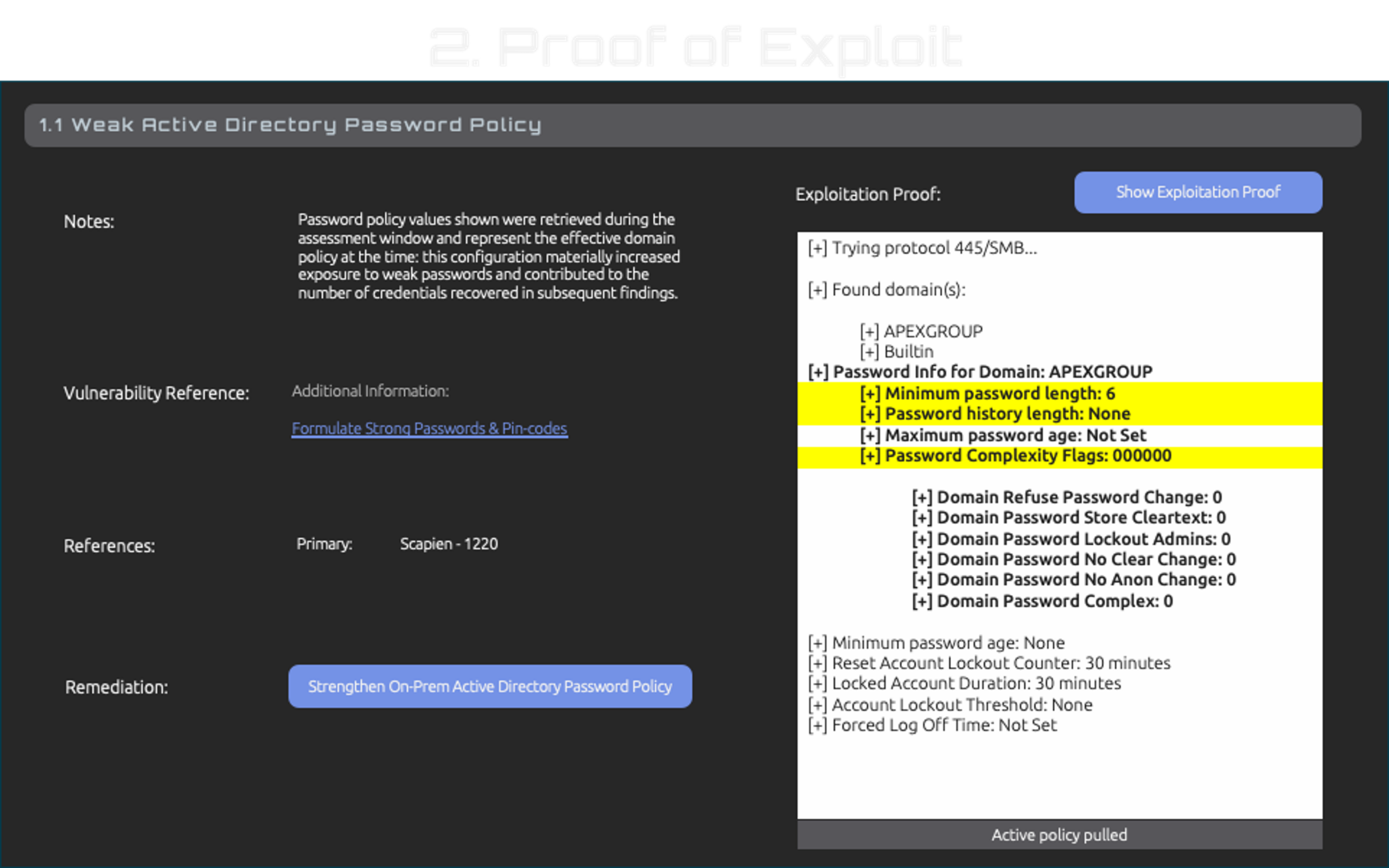
Research captures and enriches evidence such as screenshots, command output, credential proof, and data access artifacts. In iPAS, Scapien organizes that evidence into a clear record that supports validation, remediation, and verified closure.
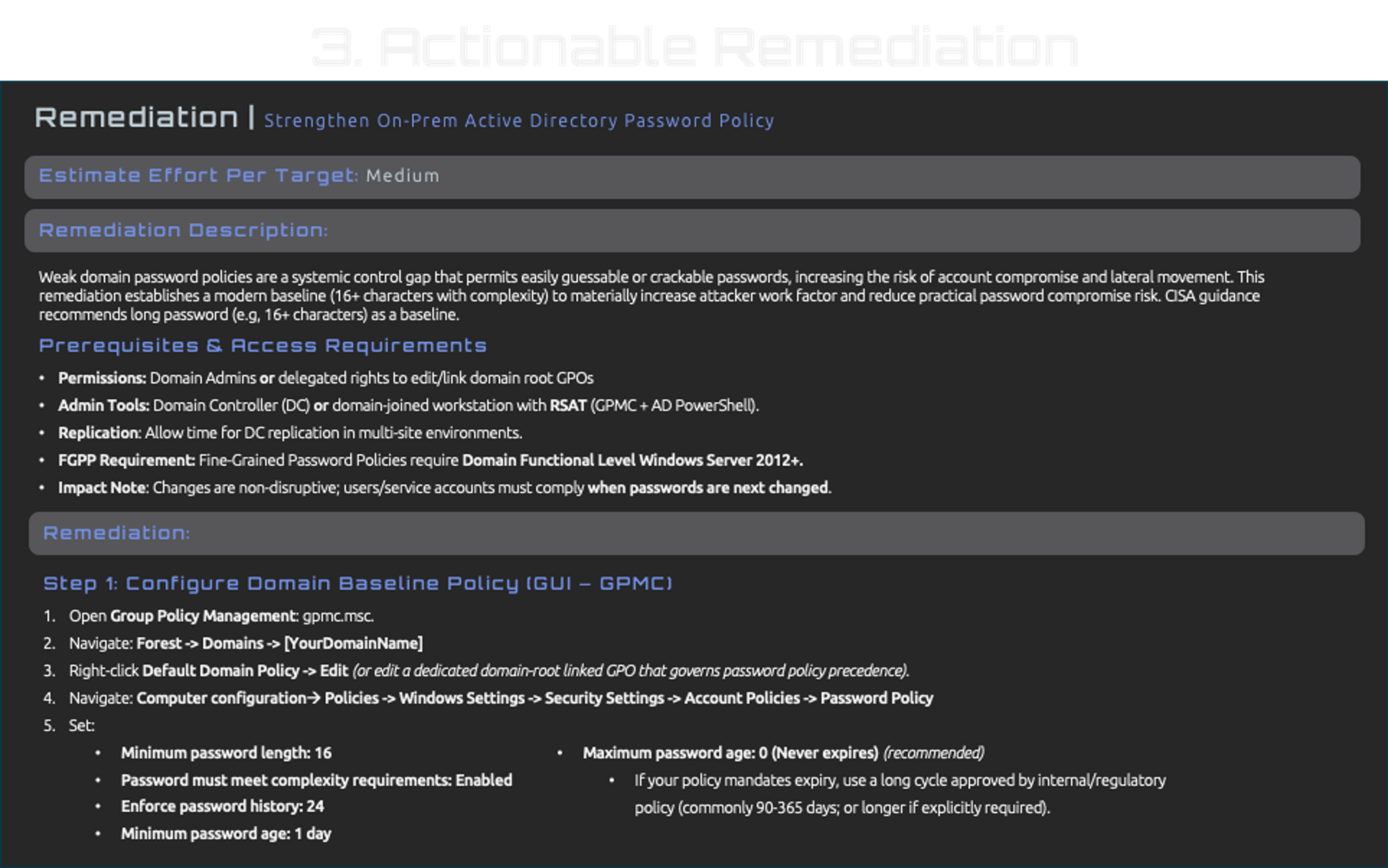
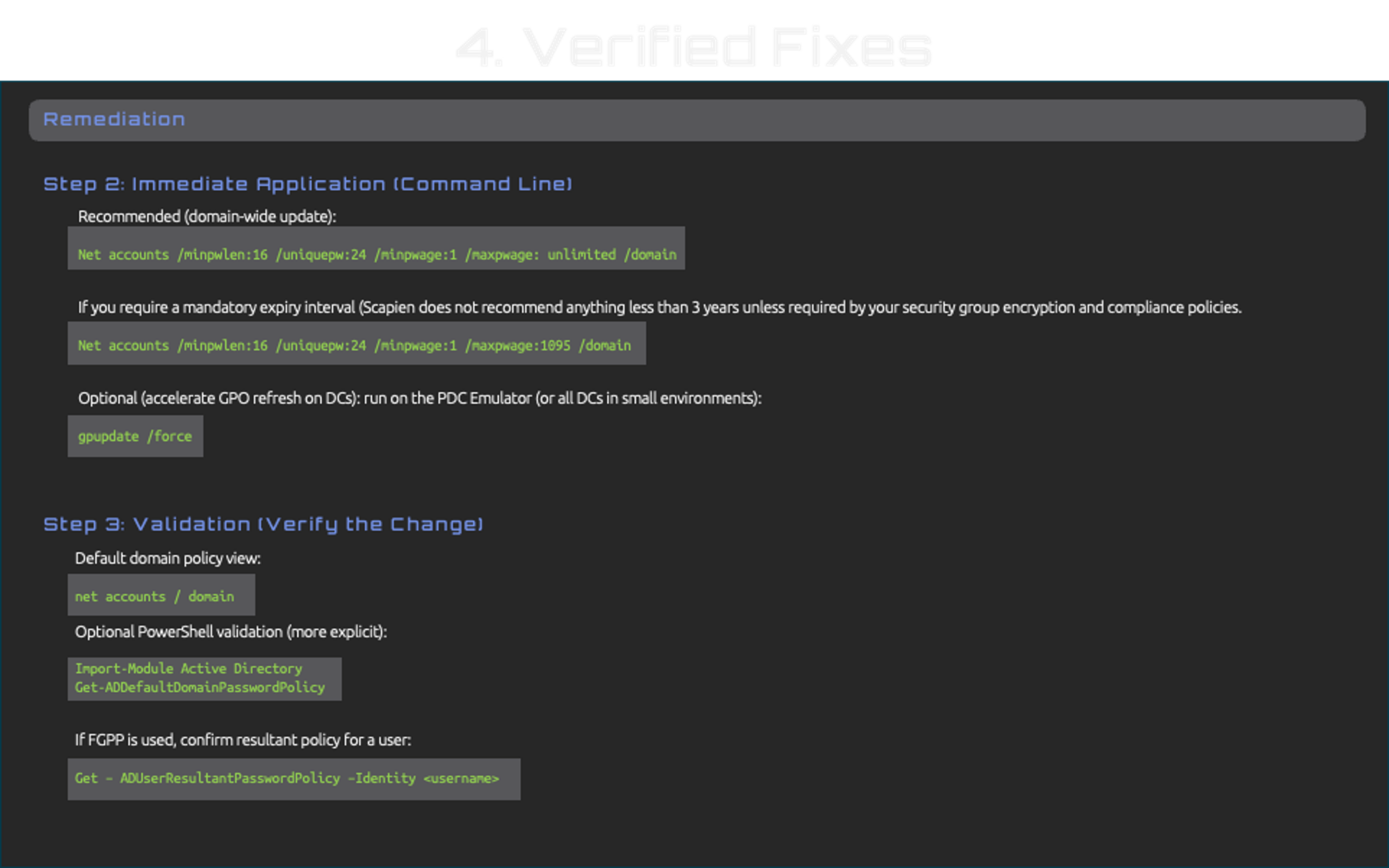
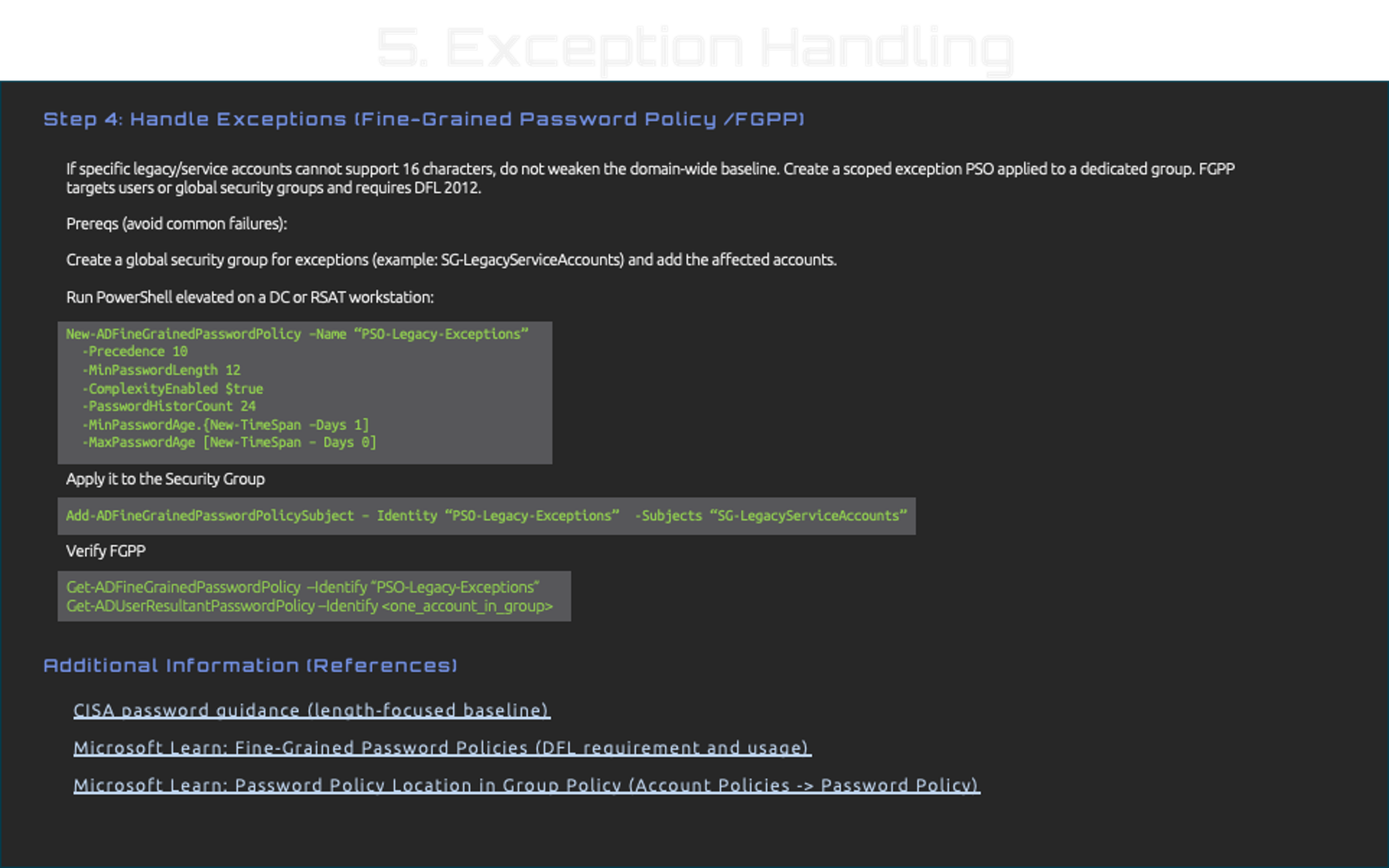
This phase also defines remediation. Scapien turns findings into safe, environment-specific fixes with relevant dependencies, implementation risks, common false fixes, and clear closure criteria.
As a result, teams reduce time to remediate, or TTR. Instead of handing over opaque vulnerability data, Scapien provides researched remediation guidance that security and engineering teams can apply quickly with less back-and-forth.
Publish: Validated Findings + Efficient Results Set
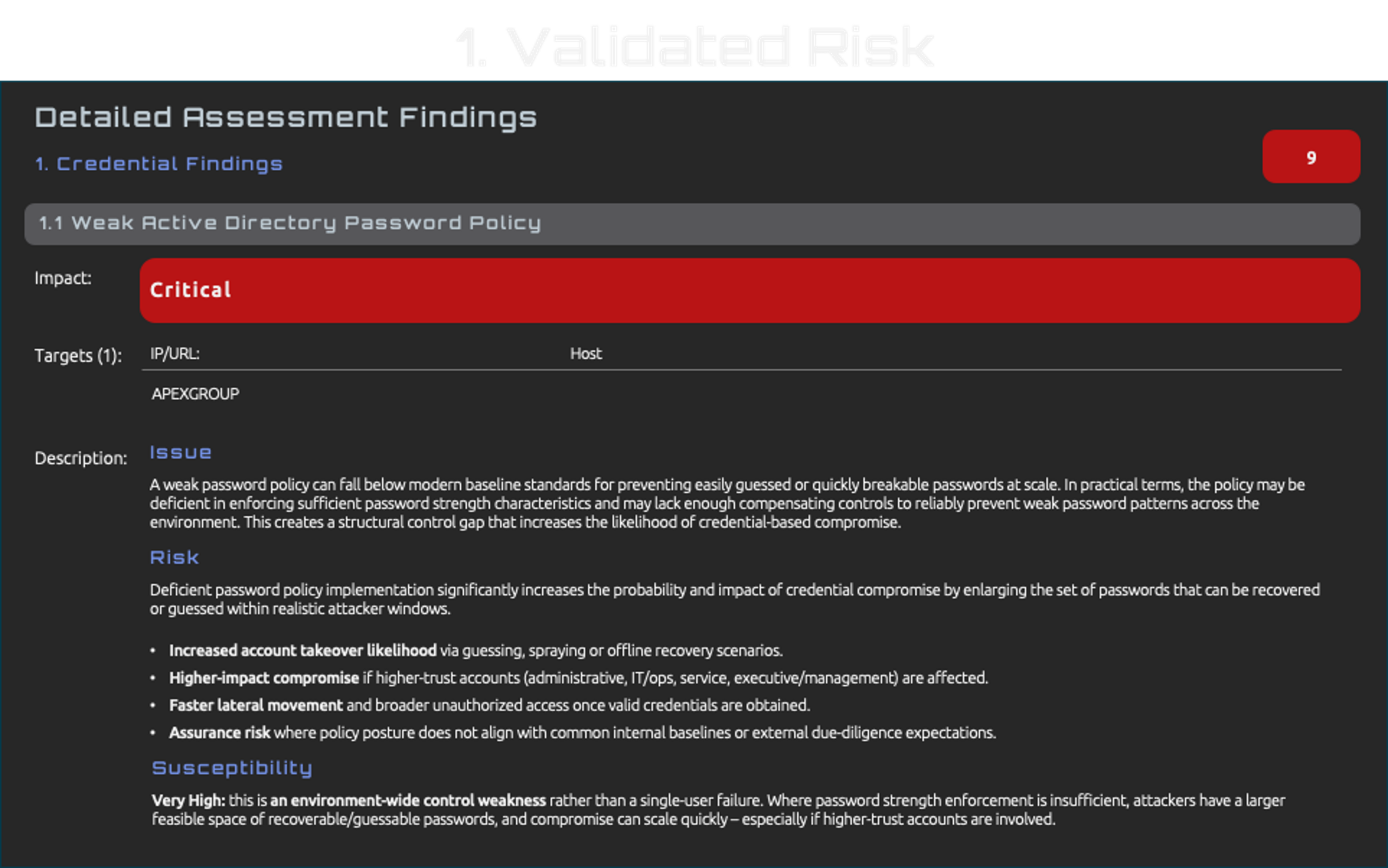
Scapien publishes validated security risks as Findings. Each Finding connects affected assets, supporting evidence, and remediation guidance in iPAS.
Before results reach the customer, Scapien validates and quality-checks each Finding. This gives teams a clean, actionable set of security risks they can address immediately.
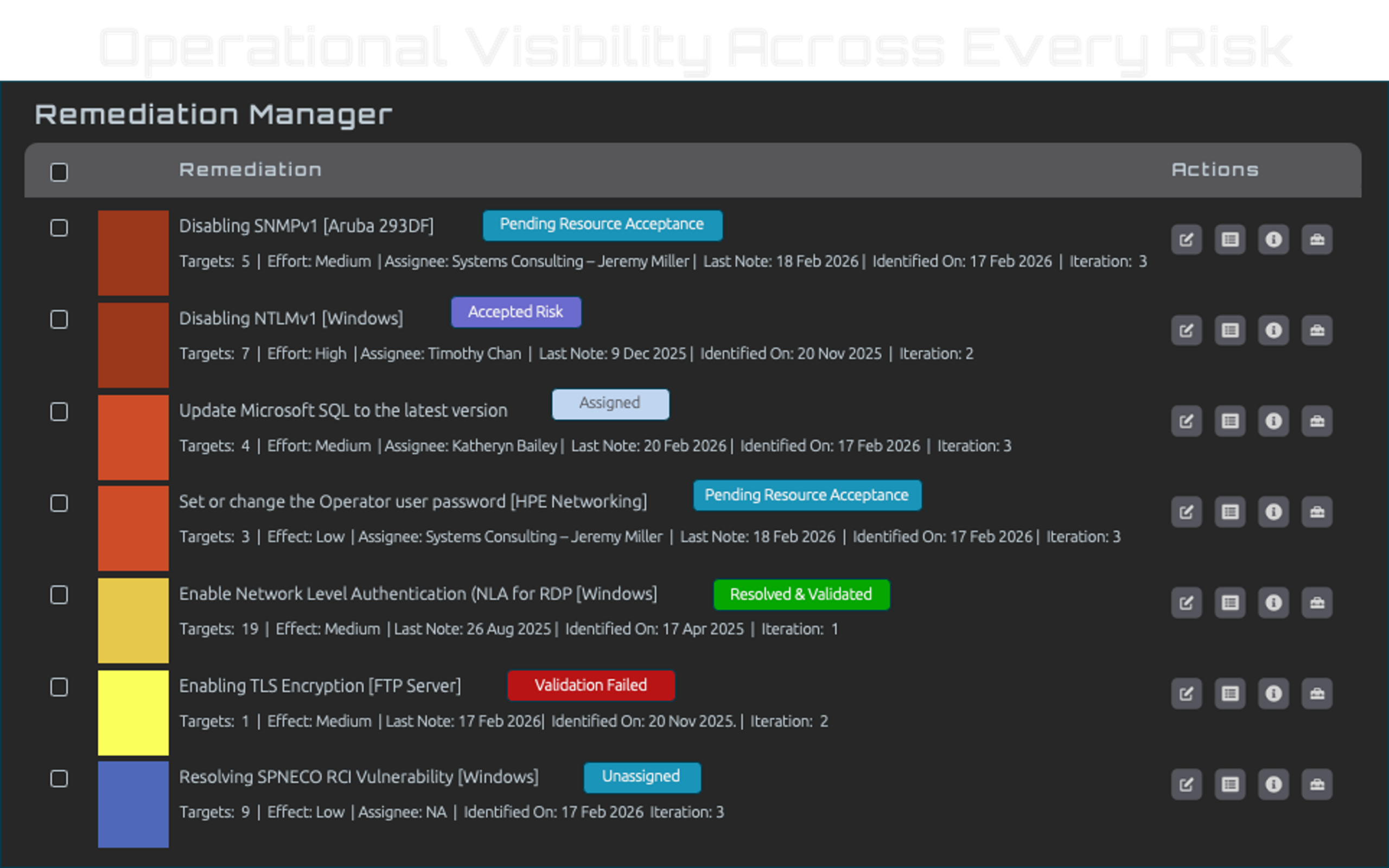
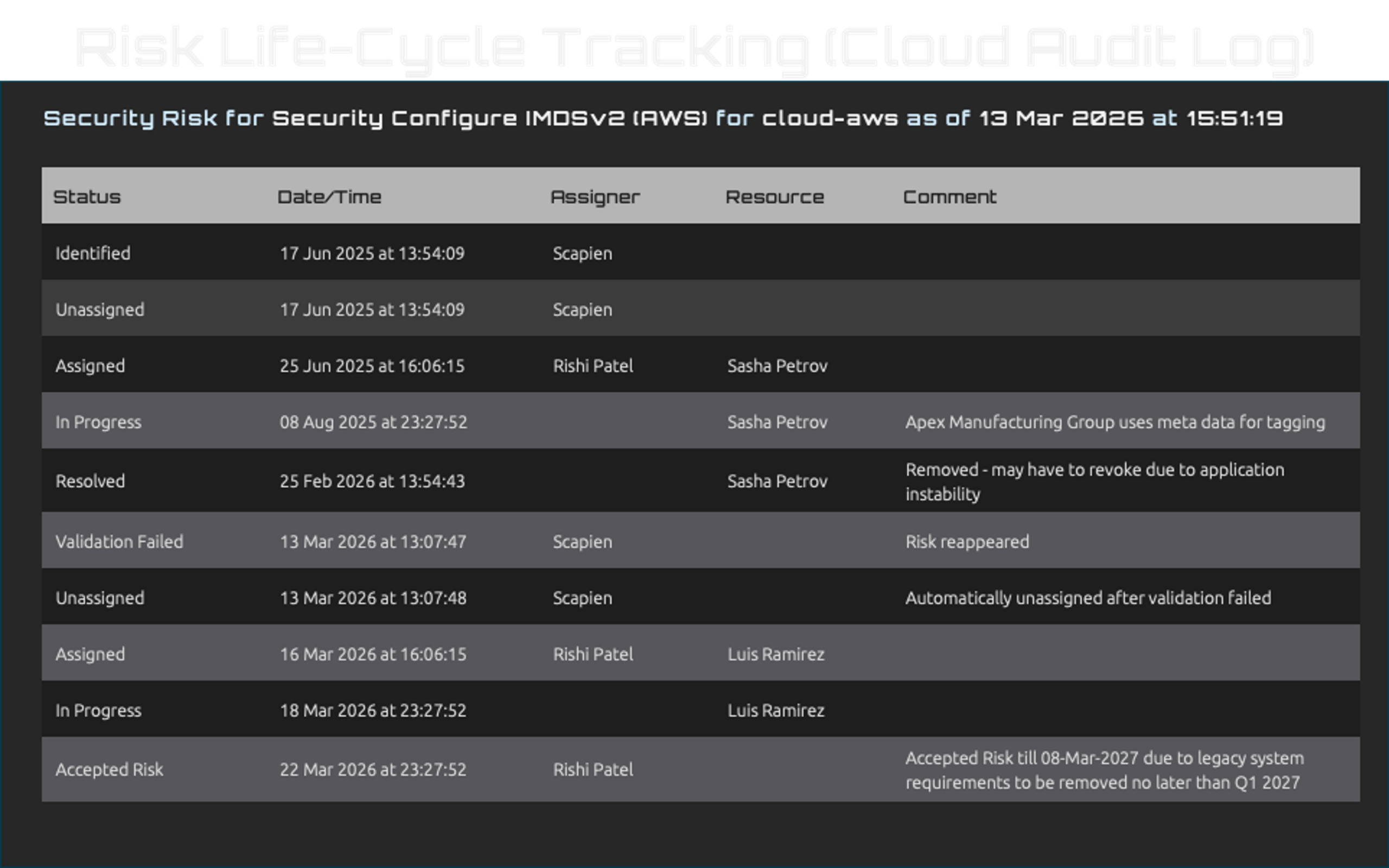
Every Finding then moves through a tracked lifecycle: discovery, assignment, remediation, retest, validation, and closure. This creates operational clarity, reduces ambiguity, and keeps remediation connected to verified security evidence.
The result is one system for managing validated Findings, audit-ready state transitions, and measurable remediation progress across the security lifecycle.